
Description
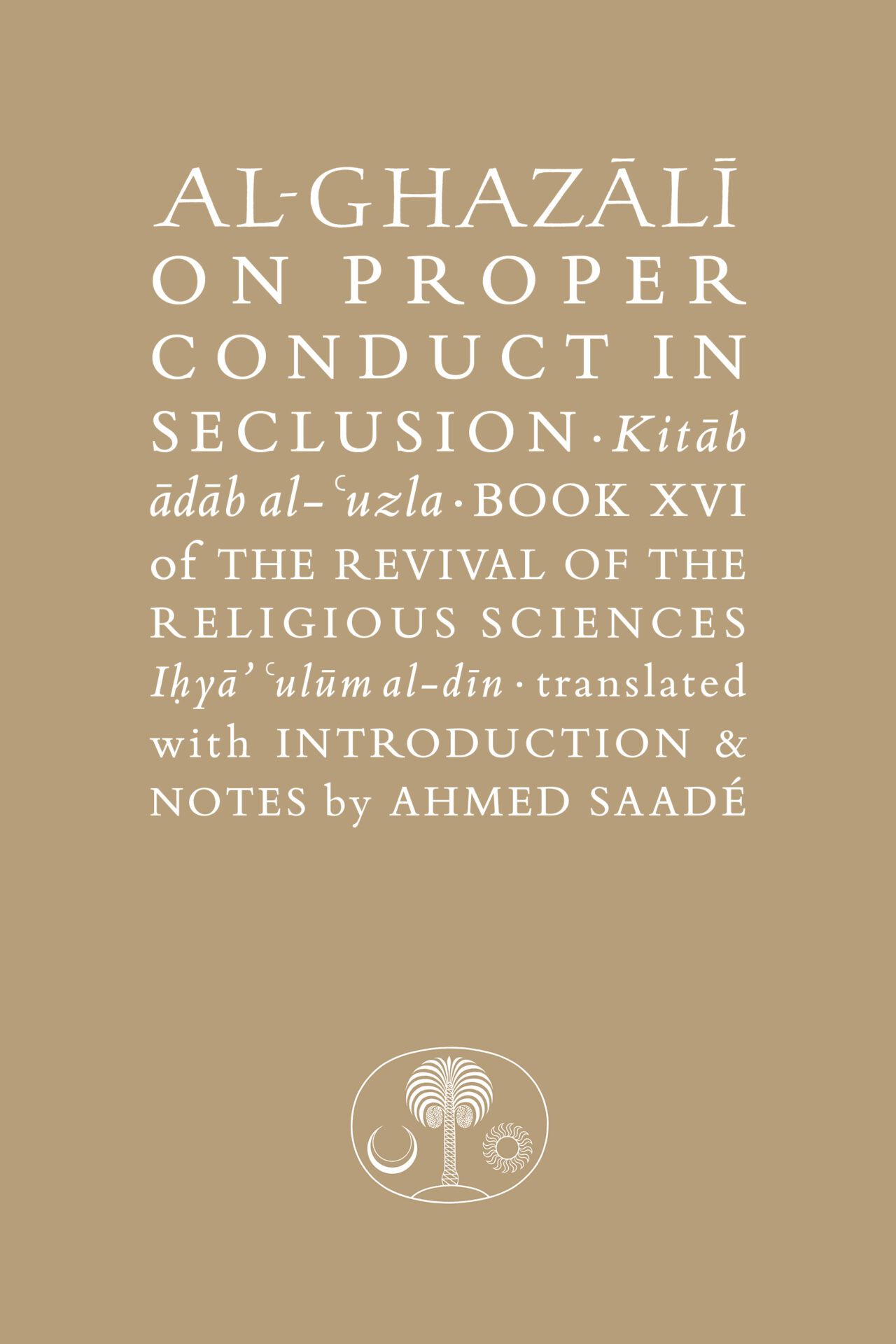
Al-Ghazali on Proper Conduct in Seclusion is the sixteenth chapter of the Revival of the Religious Sciences (Ihya’ ʿulum al-din), a monumental work of classical Islam written by the theologian-mystic Abu Hamid al-Ghazali (d. 505/1111).
In this chapter, Ghazali addresses the question, ‘Is it better to engage in society or to withdraw from it in order to perfect one’s relation to God?’ In presenting the arguments for and against seclusion (ʿuzla), Ghazali starts with the example of the Prophet Muhammad and his Companions, and follows this with the opinions of later schools of thought: those who gave preference to seclusion and those who preferred socialising (mukhalata) over seclusion. In the second half of the work, Ghazali presents his own opinions on the advantages and disadvantages of seclusion. The advantages of seclusion are divided into the religious benefits and the worldly benefits. Among the religious benefits are: the ability to fully engage in acts of obedience and to maintain consistency in worship, contemplation and the cultivation of knowledge; freeing oneself from committing prohibitions to which one is exposed through socialising, such as ostentation and backbiting; and the avoidance of the gradual corruption of one’s disposition through the acquisition of vile traits and immoral actions from evil companions. The worldly benefits include: being able to focus on one’s work; freeing oneself from worldliness and covetousness; and protecting oneself and one’s dignity from harmful persons. As to the disadvantages of seclusion, they include: the inability to study with a teacher or to teach; the inability to learn from and emulate the good manners of others; and the inability to benefit others and to gain the reward for benefiting them. Ghazali concludes his discussion of seclusion by saying that the advantages and disadvantages of seclusion differ from one person to another and that each person should examine his or her motives, intention and heart when deciding on the best course to take.
Al-Ghazali on Proper Conduct in Seclusion also includes a translation of Ghazali’s own Introduction to the Revival of the Religious Sciences, which gives the reasons that caused him to write the work, and which outlines the structure of the whole of the Revival and places each of the forty Books in the context of the others.
Abu Hamid al-Ghazali (1058–1111), theologian, logician, jurist and mystic, was born and died in Tus in Central Asia, but spent much of his life lecturing in Baghdad or leading the life of a wandering Sufi. His most celebrated work, Revival of the Religious Sciences, has exercised a profound influence on Muslim intellectual history by exploring the mystical significance of the practices and beliefs of Islamic orthodoxy, earning him the title of Hujjat al-Islam, the ‘Proof of Islam’.
Dr Ahmed Saadé is a lecturer in behavioural economics and management at City St George’s, University of London. He previously taught at University College London and has also held a number of visiting roles at other British universities. His academic work examines the dynamics of aspirations and the pursuit of well-being.


Reviews
There are no reviews yet.